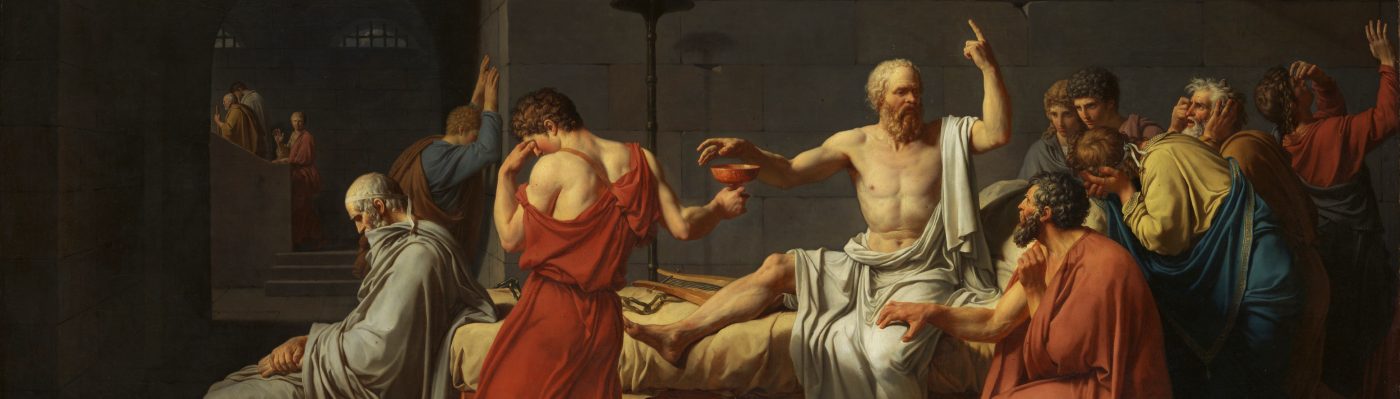
When acclaimed director Christopher Nolan recently announced the cast of his upcoming adaptation of the Odyssey, there was much wailing and gnashing of teeth from a certain small section of the internet. The issue that attracted the internet’s ire on this particular occasion was Nolan’s choice of Tom Holland to play Odysseus’ young son, Telemachus.
The internet’s criticism could be summed up in a single phrase: iphone face. As a man whose age of cultural relevance is rapidly sunsetting, I had to look up what the kids meant by the term. It turns out that iphone face refers to facial characteristics that look distinctly modern, that is, out of place in historical movies.

The exact features that give somebody “iPhone face” are tough to pin down, but as best as I can tell, it means a youthful and sculpted face of the kind that is common among influencers on TikTok or other social media.
The notion intrigued me. Are there people today with faces that would have been completely out of place in the ancient world?
As it turns out, no. So-called iPhone face doesn’t really reflect any kind of historical reality. The best pieces of evidence I can point to are the ancient Fayyun portraits, a special kind of portrait placed on sarcophagi in Roman Empire-era Egypt.

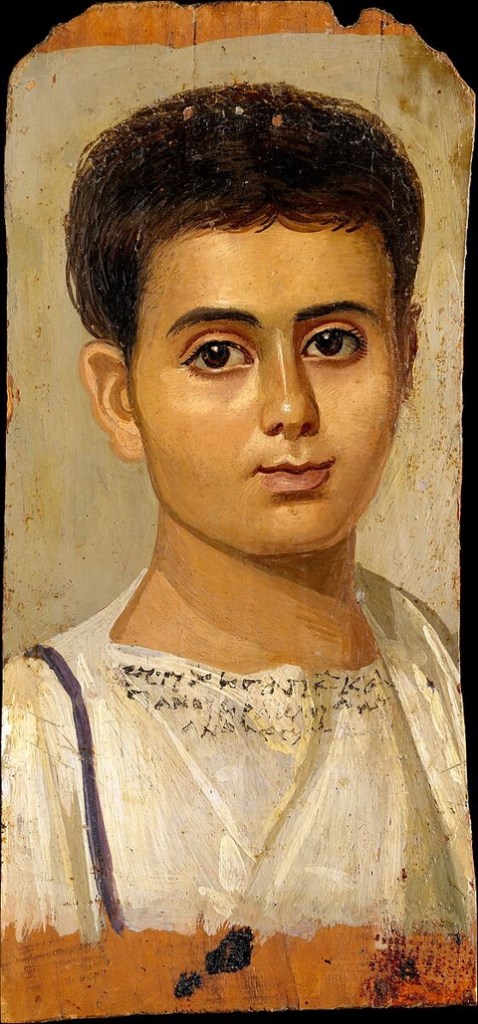
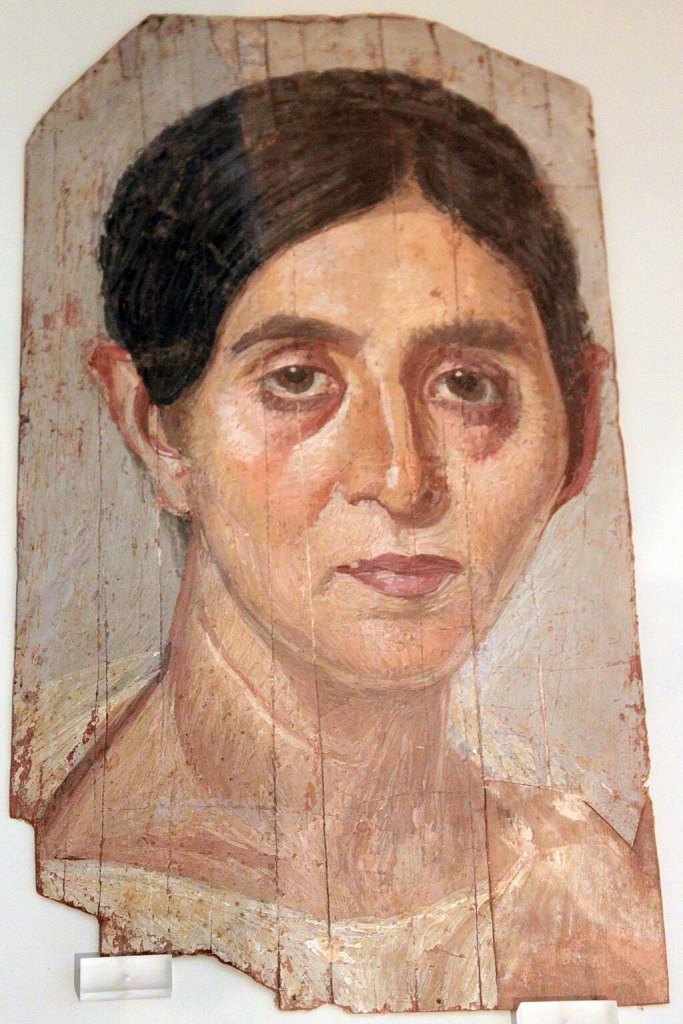
These are, in my opinion, some of the coolest pieces of art to come out of the ancient world. Their intimate and naturalistic style wouldn’t appear again in western art for over a thousand years. When you go through these portraits (and there are hundreds of them) it’s hard not to recognize people you’ve seen on the street, or even celebrities.
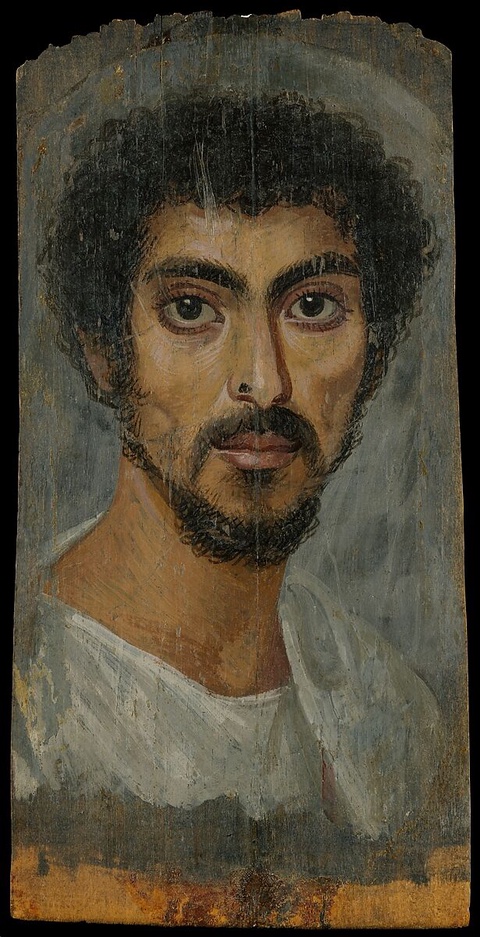


I could go on, but I think these images alone are proof that the ancient world was full of faces pretty much identical to our own. And that shouldn’t be a surprise. As a species, people today are more or less genetically identical to our ancestors 2,000 years ago. Two millennia is a blink of an eye, evolutionarily speaking. And while our lifestyles have changed, (you’ll certainly see more overweight people on the street than in the ancient world) the underlying biology remains the same (the ancient Romans also wrote at length about obesity, for instance).
So no , there hasn’t been any fundamental shift in human appearance since the ancient world depicted in the Odyssey. But let’s move on to the even more interesting question. Why do people believe that humans today look in some way different? I think the answer comes from our core assumptions about premodern humans.
The Eloi Theory
In his 1895 science fiction book The Time Machine, H.G. Wells imagined a race of future humans who were effeminate, pacifistic, and hedonistic. He called this branch of the species the Eloi.
The Eloi mirror a common trope in how people perceive human evolution: as people evolve, they grow farther from their savage, brutal past, and therefore become more graceful, sculpted, and even effeminate. It’s a widespread idea – think of how advanced aliens are nearly always depicted as skeletally thin, with long fragile arms and legs.
Now, I would be remiss if I didn’t acknowledge that there’s a grain of truth in this theory. Scientists have identified a trend in human evolution called “gracialization,” whereby bones gradually become thinner and less dense. But that evolution has taken place slowly over hundreds of thousands of years. Maybe we will all someday look like the Eloi, but humans from the ancient world would not have been notably bulkier than we are.
The Eloi Theory is also founded on false pretenses. The stereotypical caveman is a stooped, burly individual with brow ridges and crude features. But that image came from 19th century artistic depictions of early humans, (especially Neanderthals) and were not based on any real evidence. More recent reconstructions of Neanderthal faces show little difference from our own.

Even modern teeth aren’t as remarkable as you might think. In some times and places, tooth loss was a common occurrence (think of George Washington’s famous dentures), but that was the exception rather than the rule. Without the modern world’s easy access to sugar, most people in history endured less tooth decay than we do. To be sure, you could expect to lose a few teeth over the course of your lifetime to accidents or cavities, but the stereotype of toothless medieval peasants just doesn’t follow what we know from examining historical skeletons.
An Imagined Past
The point I’m trying to make is that humans have a very clear sense that we look in some way different from the historical past. However, the evidence suggests that we aren’t as different as we think.
But here’s the funny bit. The ancient Greeks, such as the ones to be portrayed in Christopher Nolan’s movie, had the exact opposite perspective. While modern humans see their “iPhone face” as uniquely refined and sculpted, the Greeks worried that they were becoming soft and flabby in comparison to their heroic ancestors.
To make things even more interesting, (and here’s what takes this blog into a full circle) the idealized man that the ancient Greeks imagined from their legends looked… exactly like Tom Holland!

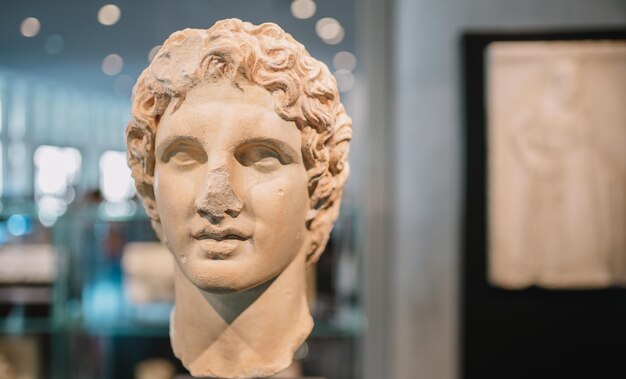

In order to keep my reputation as a respectable blogger, I opted not to include any of the pictures I found when my research led to me to google “Tom Holland shirtless,” but if you want to try the search as an extracurricular activity, I think you’ll find that it does nothing to weaken his clear similarities to classical Greek sculpture.
The Greeks artists, in other words, had their own version of iPhone face. Completely absent from their heroic art was any individual who didn’t fully match up with their ideals of the historical physique. Had Christopher Nolan lived in ancient Greece, he might have been praised for choosing Tom Holland but criticized for picking other actors who don’t meet the Greek’s perfectionistic view of the heroic human body.
The whole notion of iPhone face may be founded on false premises, but there’s a certain comfort to the fact that cultures throughout history have been guilty of very similar false assumptions. The gulf between us and our historical ancestors can seem so large that imagining ancient people with faces like Timothée Chalamet and MrBeast feels impossible, but that’s exactly what makes history so much fun. Once you accept the universality of faces, it becomes somehow easier to also see the universality of emotions like love, fear, jealousy, annoyance, and the many other quirks that make up the timeless human experience.
 Tragedy and Farce