This is Part III of my Extended Edition analysis (Fellowship of the Ring and The Two Towers are available here).
Of all the Extended Edition films, Return of the King has by far the most extra content, more than an hour of it. These include memorable scenes like the Death of Saruman and the Mouth of Sauron.
Death of Saruman
At Isengard, Theoden and Gandalf parlay with a defeated Saruman. Saruman says that they cannot defeat Sauron. Wormtongue kills Saruman, and is killed in turn by Legolas.
To be honest, I do’t think that either the Theatrical Edition or Extended Edition do justice to Saruman. The Theatrical Edition’s resolution of the Saruman story is… to not have a resolution. We just hear from Treebeard that he’s stuck in his tower and isn’t a threat anymore. So it’s nice that the Extended Edition provides a more conclusive end to our favorite evil wizard.
The problem is, I really don’t like the execution of the Death of Saruman scene. The way the characters talk at a normal volume while Saruman is clearly way out of earshot just looks wrong, and Saruman’s threats are about as generic as they can get (“you’re all going to die”). The dialogue also feels muddled. Theoden says that means to see Saruman dead, then Gandalf offers to spare him. Then Theoden suddenly wants to redeem Wormtongue. Wormtongue decides to stab Saruman, and for some inexplicable reason, Legolas shoots Wormtongue. None of it makes much sense.
It also feels anticlimactic to finish off Saruman in the first few minutes of the movie, as though he’s an afterthought. Ultimately, the only truly satisfying way to finish the Saruman storyline is the way it was handled in the book, but that was never a realistic option for the Peter Jackson adaptation.
2/5
Include? No
The Drinking Game
As the Rohirrim celebrate their victory at Helm’s Deep, Gimli challenges Legolas to a drinking contest. Legolas wins. Meanwhile, Merry and Pippin sing a hobbit song.
I’m not sure why Peter Jackson decided that elves were immune to alcohol. It certainly doesn’t come from the books. Gimli’s improvised “little hairy women” line is cringe-inducing, but fits the scene and film Gimli who (for better or worse) is the story’s designated comic relief character.
The best part of this scene actually has nothing to do with the drinking competition. It’s Merry and Pippin’s song and dance routine about the Green Dragon. We get a snippet of the song in the Theatrical Edition, but the version here is so much better.
Without the moments of merriment provided by this scene, the theatrical feast sequence comes across as more serious than it should. The shortened version leaves us with an intense conversation between Theoden and Eowyn and an equally serious one between Aragorn and Gandalf. Return of the King is already a rather somber movie, so adding some levity at the beginning gives us much-needed contrast.
3/5
Include? Yes
Eowyn’s Dream
After the feast, Aragorn finds Eowyn sleeping in the great hall. She wakes and tells Aragorn of a dark, nihilistic dream she had. Aragorn comforts her.
It’s always great to see more of the fantastic set in Edoras. I’m not sure why Eowyn doesn’t have anywhere else to sleep (she does live there after all) but her lonely couch in the center of the hall is a great visual.
In language and tone, this conversation very closely matches the one between Eowyn and Wormtongue in Two Towers, where Wormtongue speaks of “the walls of your bower closing in about you”. It seems like a disservice to Eowyn to keep her in the exact bleak place after a whole movie. I understand that an overriding sense of doom is part of Eowyn’s character, but it’s a mistake to make her so one-note.
Fun fact: the dream Eowyn describes is most likely a reference to the destruction of Numenor in the Second Age. It’s an odd allusion given that Rohan has no connection to Numenor and that Numenor was destroyed not by Sauron but by the god Eru Iluvatar. Still, the more you know.
2/5
Include? No
The Decline of Gondor
After Gandalf’s meeting with Denethor goes poorly, Gandalf tells Pippin about the white tree, the history of Gondor, and the stewards. They see an ominous storm coming from Mordor. Gandalf explains that the storm is created by Sauron.
No one can deliver exposition like Sir Ian McKellen, particularly when he’s narrating lines straight from Tolkien’s appendices. “Kings made tombs more splendid than the houses of the living, and counted the old names of their descent dearer than the names of their sons.”
Despite the great lines, we still have to face the fact that most of the things Gandalf says are obvious from the visual surroundings. Minas Tirith is a grand city but clearly in decay. You can read the role of the stewards from the fact that Denethor sits on a small chair at the foot of a large white throne.
Unfortunately, this scene also comes right before another Gandalf exposition scene, where he once again talks about the looming threat from Mordor. Redundant Gandalf exposition is one major weakness of the Extended Editions, and this scene is yet another example.
3/5
Include? No
King’s Crown
As they walk through Ithilien, Frodo tells Sam that he doesn’t think they’ll make it home. They see an old Gondorian royal statue that has been defiled by orcs. However, a beam of light shines through the clouds and illuminates the flowers growing on the king’s fallen head.
I’m always a fan of scenes taken straight from the book, and this is one of them. However, it feels better on the page. For one thing, the visuals don’t fit. The lighting is too bright and the surroundings too lush for the sudden appearance of sun and flowers to have much of an impact. Congratulations Frodo, you found flowers in… a forest. The later ‘Star in Mordor’ scene (farther down the list) illustrates contrast far better.
The same goes for Frodo’s realization about not going home. Based on his reactions to Sam saving bread for the return journey, we already know that Frodo’s optimism is long gone. The bigger reveal comes later in the movie, when even Sam’s hopes fade.
3/5
Include? No
Denethor and Faramir
Upon returning from Osgiliath, Faramir reports to Denethor. Denethor is furious that Faramir let Frodo leave. Faramir says that the ring cannot be used, and that Boromir would have fallen to the ring’s power. Denethor collapses in anger and momentarily thinks he is looking at Boromir.
The relationship between Faramir and Denethor is one of the most important parts of Return of the King, but the Theatrical Edition ruthlessly cuts away the heart of their story. The two characters only have one conversation in the Theatrical Edition, the one where Denethor sends Faramir out on his suicidal charge. This scene fills that gap.
Faramir’s decision to release Frodo was a big deal, (“your life is forfeit” says his advisor) and we see the consequences here. We also see how much Faramir has grown. “I would not use the ring,” he says, “not if Minas Tirith were falling to ruin and I alone could save it.”
The scene is also notable for a fantastic performance by John Noble, whose voice runs the gamut from a malicious purr to frothing rage to half-strangled sobs of joy.
5/5
Include? Yes
Faramir and Pippin
Faramir meets Pippin, who is wearing his new armor. Faramir reveals that the armor was made for him as a child, but it never fit right.
This is a short scene, barely over a minute, but it establishes a connection between Faramir and Pippin. That relationship does a lot to show why Pippin risks his life to save Faramir later on. The conversation about the armor both makes sense (where else would you get Hobbit-sized chainmail?) and gives us more insight as to why Faramir and Denethor never really got along. Considering that the scene can accomplish all that in so little time, I think it’s well worth including.
4/5
Include? Yes
Ghost Hands
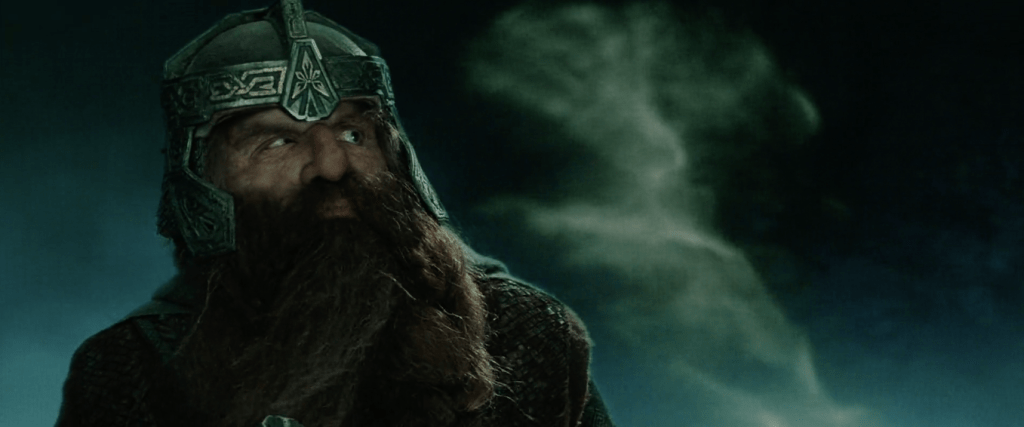
In Dunharrow, the three companions travel through mist and smoke. Legolas sees a great host of dead men following them. Gimli is spooked by spectral hands that loom from the mist. They realize that they are walking on skulls.
The Dead men of Dunharrow deserve some buildup, and this scene does a nice job setting the tone for the meeting with the dead men. In the Theatrical Edition, the companions go straight from entering the tombs to arriving at the main city of the dead.
Focusing on Gimli during this scene is a great choice. Both Legolas and Aragorn are so stoic that they barely seem fazed, but Gimli’s terror is funny and relatable. The books made the same choice by giving Gimli the POV for this section.
3/5
Include? Yes
Dead Scenes
The dead king refuses Aragorn’s offer and departs. The companions are almost buried by a massive avalanche of skulls. They leave Dunharrow and see the Corsairs already on their way to Minas Tirith. The dead king arrives, having changed his mind, and attacks the corsairs.
This is one of the most unambiguously bad inclusions in the Extended Edition. The Theatrical Edition ends with Aragorn crying out “what say you?” to the undead, leaving the audience in suspense until the Army of the Dead’s dramatic arrival at Minas Tirith. The Extended Edition, on the other hand, wastes our time with a fakeout before the dead king inexplicably changes his mind. The suspense is gone, with nothing gained in return.
I kinda like the Indiana Jones-esque avalanche of skulls, but it’s way too over the top, and feels like meaningless spectacle.
2/5
Include: No
Rohirrim Pit Stop
On the way to Minas Tirith, the Rohirrim stop to rest. Eowyn expects death, but Merry tells her they have to hope. He says he’s fighting because he wants to save his friends.
At the end of the day, the Lord of the Rings is about people fighting for those they love. I appreciate the way this scene lays that idea out, but there’s one major problem. As stated above, it’s best not to give the audience constant reminders that reinforcements are on the way. Better to let viewers almost forget, then deliver a dramatic arrival. There’s a reason we never got a scene of Gandalf finding Eomer and bringing him to Helm’s Deep.
My other, Cinemasins gripe with this scene is that Eowyn has her helmet off in the middle of the Rohirrim camp. She’s supposed to be traveling in secret, against the orders of Theoden. Ah well, maybe no one was paying attention.
3/5
Include? No
Witch King vs Gandalf
In Minas Tirith, the Witch King attacks Gandalf and Pippin. He breaks Gandalf’s staff and is about to kill him when he hears horns. Rohan has come at last.
This is a great scene. We hear a lot about the Witch King, but up to this point, his main on-screen feat has been running away from Aragorn on Weathertop. This scene finally does justice to the character (which makes Eowyn and Merry’s actions even more impressive) and gives the arrival of the Rohirrim an extra dramatic punch. In the Theatrical Edition, the Rohirrim arrive at a less climactic moment.
4/5
Include? Yes
Houses of Healing
The good guys search the Pelennor fields for the wounded. Eomer finds Eowyn’s motionless body, and Pippin finds Merry’s cloak. Aragorn heals Eowen.
The highlight of this scene is the phenomenally good scream by Eomer upon seeing Eowyn. It puts the Vader scream to shame. But in contrast, Aragorn’s healing scene feels very cold and detached.
Only an exceptionally astute viewer will notice that Aragorn is using the same methods to treat Eowyn as he used on Frodo in Fellowship. The Houses of Healing scene is significant in the books because Tolkien shows that “the hands of a king are the hands of a healer” but that idea doesn’t really come across in the movie.
The Theatrical Edition already kept the most emotional part of this sequence, where Pippin finds Merry and promises to look after him.
3.5/5
Include? No
Aragorn uses the Palantir
In an effort to distract Sauron, Aragorn announces himself and his lineage via the Palantir. In response, Sauron shows Aragorn an image of Arwen dying. Aragorn drops the Palantir in horror.
Without a doubt, Aragorn announcing himself to Sauron is a cool moment, diluted only slightly by the fact that he has already announced his birthright by taking the Anduril and using it to command the Army of the Dead.
However it ends in disappointing anticlimax. Aragorn loses the contest of wills in a way that feels wrong for a character at the culmination of his arc. The scene seems to suggest that Aragorn is not worthy of the title he claims. Aragorn already knows from Elrond that Arwen is dying, so a panic-attack at the sight feels like a bit of an overreaction given how stoic a character Aragorn is.
I could easily imagine keeping a different version of this scene, but as it is, it’s a skip for me.
2/5
Include? No
Where There’s a Whip There’s a Way
Sam and Frodo are mistaken for orcs and forced to march towards the Black Gate. Sam creates a distraction, allowing them to get away.
This is a fairly long scene that exists only to put another obstacle in the way of Frodo and Sam’s arrival at Mount Doom. The problem is that compared to the obstacles before and after (being imprisoned by orcs and having to climb an entire volcano) it feels more of an inconvenience. It also undermines the whole sacrificial diversion of Aragorn and company, because the sacrifice actually fails to clear the path for Sam and Frodo.
3/5
Include? No
Star in Mordor
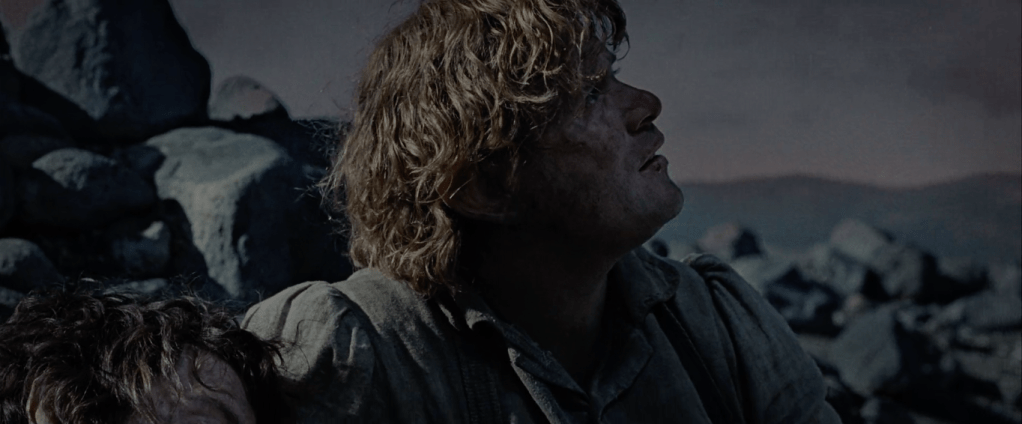
Upon arriving at Mount Doom, Sam and Frodo ditch their orc armor and pots and pans. Through the thick clouds, Sam notices a star. Frodo is too far gone to see it.
This scene feels very similar to the King’s Flower Crown scene from earlier in the movie. Of the two, I prefer this one. The contrast between beauty and darkness feels much clearer and more powerful from within the heart of Mordor.
I like that we see Sam throw away his precious pots and pans. It shows how desperate he is to finally finish the journey, and that he doesn’t think he’ll ever get the chance to use them again.
4/5
Include? Yes
Mouth of Sauron
The Black Gate opens, revealing the hideous Mouth of Sauron. He rejects Gandalf’s demands and shows Frodo mithril coat, claiming that the hobbit is dead. As he starts to mock Aragorn, Aragorn cuts off his head.
Kudos to the Weta Workshop team for making the Mouth of Sauron look so gloriously sickening. However, I still don’t like the scene. The negotiations are clearly pointless and the demands absurd (“the armies of Mordor must disband. Sauron is to depart these lands, never to return”). I get that Gandalf is playing for time, but come on. What’s more, the Mouth’s story about the death of Sam and Frodo don’t have much of an effect on the viewer since we already know that it’s a lie. The book version of this scene takes place before the reader knows what happened to Sam and Frodo, creating a suspense that the movie version just doesn’t have.
My least favorite part of the scene is how it ends. Now, I’m not saying the Mouth of Sauron is a good guy, but it’s still bad form to behead unarmed diplomats, no matter how much they hurt your feelings. That is not the kind of thing we expect from a just and worthy king. In the books, the heroes make a point of obeying the custom of diplomats, even though the Mouth insults them. “You have naught to fear from us,” says book Gandalf “until your errand is done.”
Between Aragorn’s decapitation of a messenger and Faramir’s brutality toward Gollum, the good guys commit entirely too many war crimes for my liking, and without the movie ever judging them for it.
3/5
Include? No
Wrap-Up
That’s it! Remember, I haven’t touched on any additions shorter than one minute in length. I counted sixteen major added scenes in Return of the King, of which I would have kept six. Feel free to argue for you own version of the Extended Edition in the comments below.
Thanks for sticking with me on this fun analysis of how to much an amazing trilogy even better!
Final Trilogy Summary
Fellowship: 3/11
Two Towers: 7/17
Return of the King: 6/16
Overall: 16/44
 Tragedy and Farce